1. Look at the far edge of the screen, not at your bike
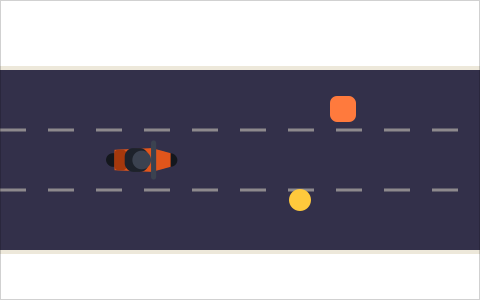
This is the single biggest change most players can make. Your bike is where you already are; the information you need is at the opposite edge of the screen. In a scrolling game that is the right-hand edge, and in a top-down crossing game it is two lanes ahead.
It feels wrong at first, because watching the bike feels like control. Try it deliberately for one run of Motorcycle Rush — consciously keep your eyes at the right edge — and compare the score. The difference is usually immediate.
2. Commit early, and do not change your mind
Half-completed inputs cause more crashes than wrong inputs. In traffic games particularly, the classic failure is starting a lane change, seeing something, and hesitating — which puts you between two lanes at the worst moment.
Pick the gap while it is still far away and take it. If it turns out to be wrong, you at least end up somewhere definite, and being definite is survivable.
3. Correct in small taps, not held inputs
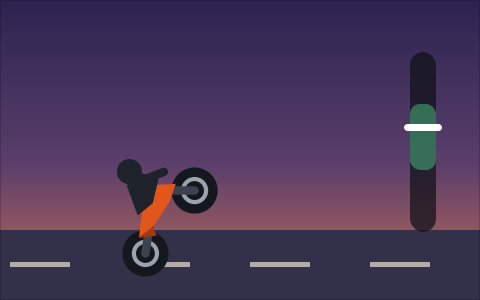
Every game on this site with a balance or steering component responds with some momentum. A held input keeps applying after you have already reached where you wanted to be, so you overshoot, then over-correct the other way, and the oscillation gets worse.
Motorcycle Wheelie is the purest demonstration: almost every loop-out is a hold that should have been a tap. Motorcycle Balance teaches the same lesson on a different axis, and there it is even more obvious because you can stop moving forward and watch your own corrections fight each other.
4. Learn what actually kills you
When a run ends, name the cause before restarting. “I died” is not information. “I was in the outside lane with nowhere to go” is. Most players discover their failures are far less varied than they assumed — usually two or three repeated situations.
Once you can name it, you can practise it. If the answer is always “I was too far right when the cluster arrived”, then the fix is positioning, not reflexes.
5. Slow down deliberately, once
In any game where you control your speed, do one run at a pace that feels too slow. It will score badly and it will teach you the pattern structure — where traffic clusters, how dunes are spaced, when gates arrive — far faster than ten fast runs will.
Highway Bike Racer and Desert Motorcycle Rush both reward this a lot, because both generate content in patterns rather than at random.
6. Practise the specific thing, in the game built for it
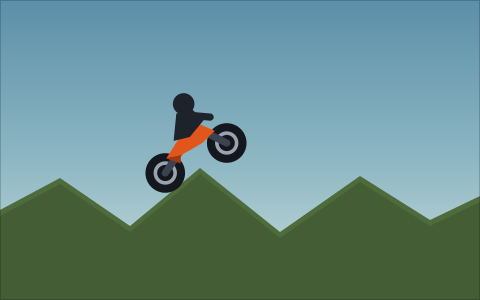
This site is deliberately arranged so that each mechanic has a game where it is the whole game. If your weakness is landing angle, twenty minutes of Dirt Bike Challenge will do more for your stunt scores than an hour of trying to fix it inside a stunt run.
The same applies to reading traffic (Traffic Bike Escape, where there is no clock at all), to balance (Motorcycle Wheelie) and to timing windows (Bike Speed Challenge).
7. Stop when you get worse
Arcade skill degrades with fatigue faster than most people expect, and a long session usually ends with a stretch of runs well below your average. Those runs teach you bad habits because you are reacting rather than reading.
When two or three runs in a row come in noticeably below your recent average, stop. The next session almost always starts higher than the one you were grinding.