Step 1: learn the shape before the pace
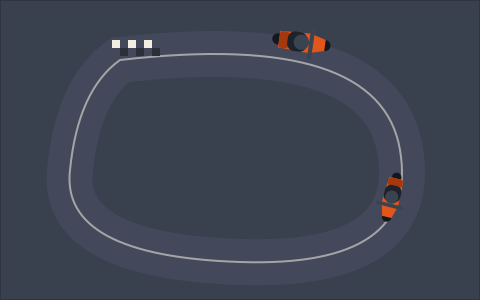
Do three laps of City Bike Racer deliberately slowly, staying exactly on the racing line, with no attempt to be fast. Your goal is to know what comes next without looking.
This is the single most effective racing practice technique and virtually nobody does it voluntarily, because it feels like wasting laps. It is not: you cannot optimise a corner you are still surprised by.
Step 2: find the corner that is costing you
On a fixed circuit, your lap time is dominated by two or three corners, not by all of them. Watch for the ones where you brake hardest, where you run wide, or where you find yourself coasting.
Coasting is the biggest tell. Any moment where you are neither braking nor accelerating is time you are giving away, and it almost always means you entered the corner too fast to get back on the throttle.
Step 3: fix the entry, not the exit
A bad exit is almost always caused by a bad entry. If you are running wide at the exit, the fix is earlier braking and a later turn-in — not fighting the bike on the way out.
Try one lap where you brake noticeably earlier than usual for your problem corner. If the exit improves, your entry speed was the issue. If it does not, your turn-in point was.
Step 4: separate the two things you are measuring
City Bike Racer stores your best lap time separately from your best race result, and that separation is useful. Racing the rivals teaches you to make decisions under pressure; chasing a lap time teaches you precision.
Do them in separate sessions. Trying to set a lap record while defending a position produces neither.
Step 5: practise the components elsewhere
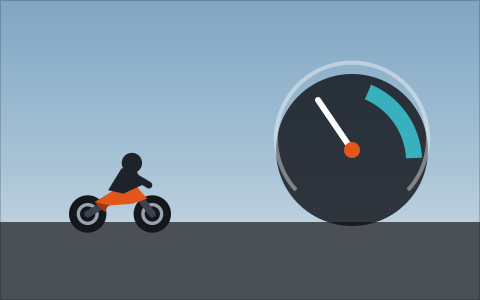
If your problem is throttle timing, Bike Speed Challenge isolates it into six discrete decisions with immediate graded feedback. Nothing else on this site gives you feedback that direct.
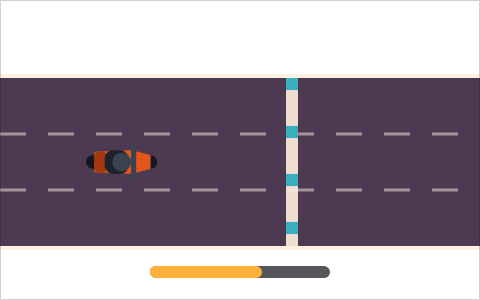
If your problem is reading a road at speed rather than cornering, Highway Bike Racer is the drill — free steering, your own throttle, and traffic generated in clusters you can learn to read.
If your problem is that you lose time when under pressure, Motorcycle Time Attack applies pressure without a run-ending crash, so you can practise composure cheaply.
The plateau, and how to break it
Nearly everyone plateaus once. The usual cause is that you have optimised your driving within a habit — a braking point, a turn-in point — that is itself the limit.
Deliberately do something different for one lap. Brake much earlier. Turn in much later. Take a corner in a gear you would not normally use. Most of these experiments will be slower, and one of them will surprise you, and that one is where your next second is.
What does not help
Grinding. Twenty consecutive laps without changing anything reinforces the habit that is limiting you.
Holding the throttle down. In every grip-limited game here, maximum throttle through a corner runs you wide, and running wide is slower than the brake application that would have avoided it.
Playing tired. Arcade skill degrades with fatigue faster than most people expect, and the runs at the end of a long session teach you bad habits.