The extendable countdown: Motorcycle Time Attack
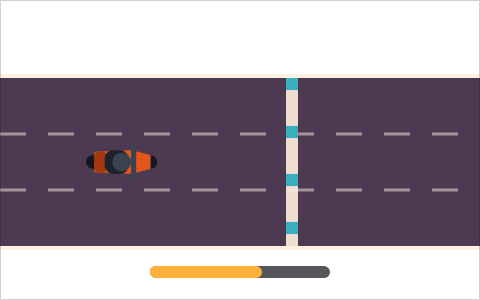
Motorcycle Time Attack starts you with about twenty seconds. Every checkpoint gate adds more, and each gate adds a little less than the one before. The run ends when the clock reaches zero — there is no crash to avoid at all.
That structure makes the clock your only enemy, which changes your relationship with hazards completely. Barrier contact does not end your run; it scrubs speed, and speed is time. So a barrier is a time penalty, not a crash, and treating it as one stops you playing too carefully.
How to beat it: take gates through their centre, brake before corners and get back on the throttle at the apex, and do not chase a lost line. The escalating gate value means the run ends where your cornering stops improving — so cornering is the only thing worth practising.
The fixed-length run: Moto Coin Rush
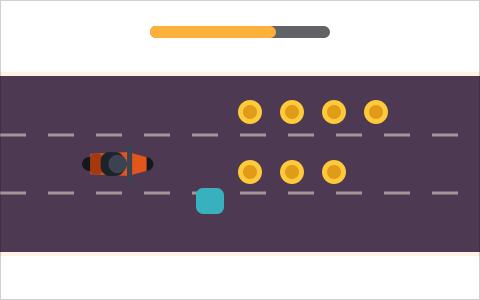
Moto Coin Rush gives you exactly sixty seconds regardless of what you do, and hazards deduct three seconds rather than ending the run. That makes it an efficiency problem: how much value can you extract from a fixed budget?
The key consequence is that a hazard is sometimes worth riding through. If crossing one costs three seconds and gets you into a dense cluster you would otherwise miss, the maths usually favours the coins.
How to score high: plan two patterns ahead rather than sitting in the lane with the most coins right now. Save the multiplier for the densest cluster you can see coming, and ride the centre lane while a magnet is active so it reaches both outer lanes.
The lap timer: City Bike Racer
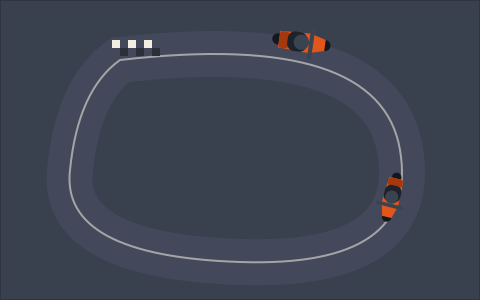
City Bike Racer keeps your best lap separately from your best race result. A lap timer is a precision instrument rather than a pressure device — nothing bad happens when it runs, it just records how good you were.
How to improve it: chase the lap in a separate session from chasing the win. Racing forces compromises — defending a line, avoiding a rival — that cost lap time. A clean solo lap and a good race are two different exercises.
The stage clock: Ultimate Motorcycle Arcade
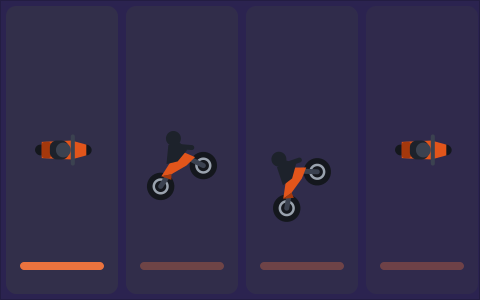
Ultimate Motorcycle Arcade gives each of its four stages about twenty seconds, and the stages run whether you are ready or not. The clock here is a metronome rather than a challenge.
How to handle it: read the stage banner immediately. Two seconds of confusion at a stage change costs more than any mistake inside a stage. And do not chase a bad stage — they are scored independently, so a weak wheelie hold does not have to become a weak traffic weave.
The general skill: composure under a clock
A visible countdown makes almost everyone play worse for the first few runs. The specific failure is a shift from reading to reacting: you stop looking ahead and start responding to whatever is closest.
The fix is deliberate practice at ignoring it. In Motorcycle Time Attack, do one run where you consciously never look at the clock, and instead keep your eyes on the road ahead. Most players score better on that run than on the ones where they were monitoring the timer, which is a useful thing to have proven to yourself.